
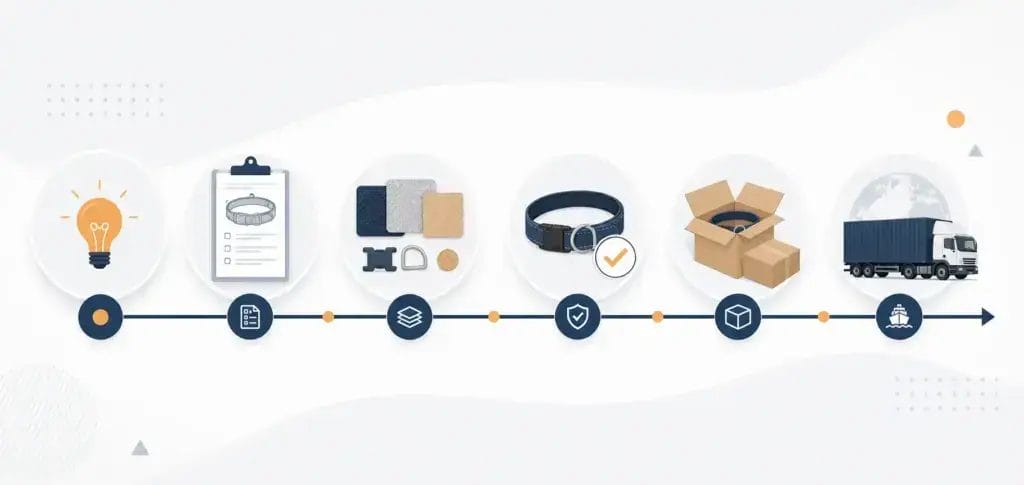
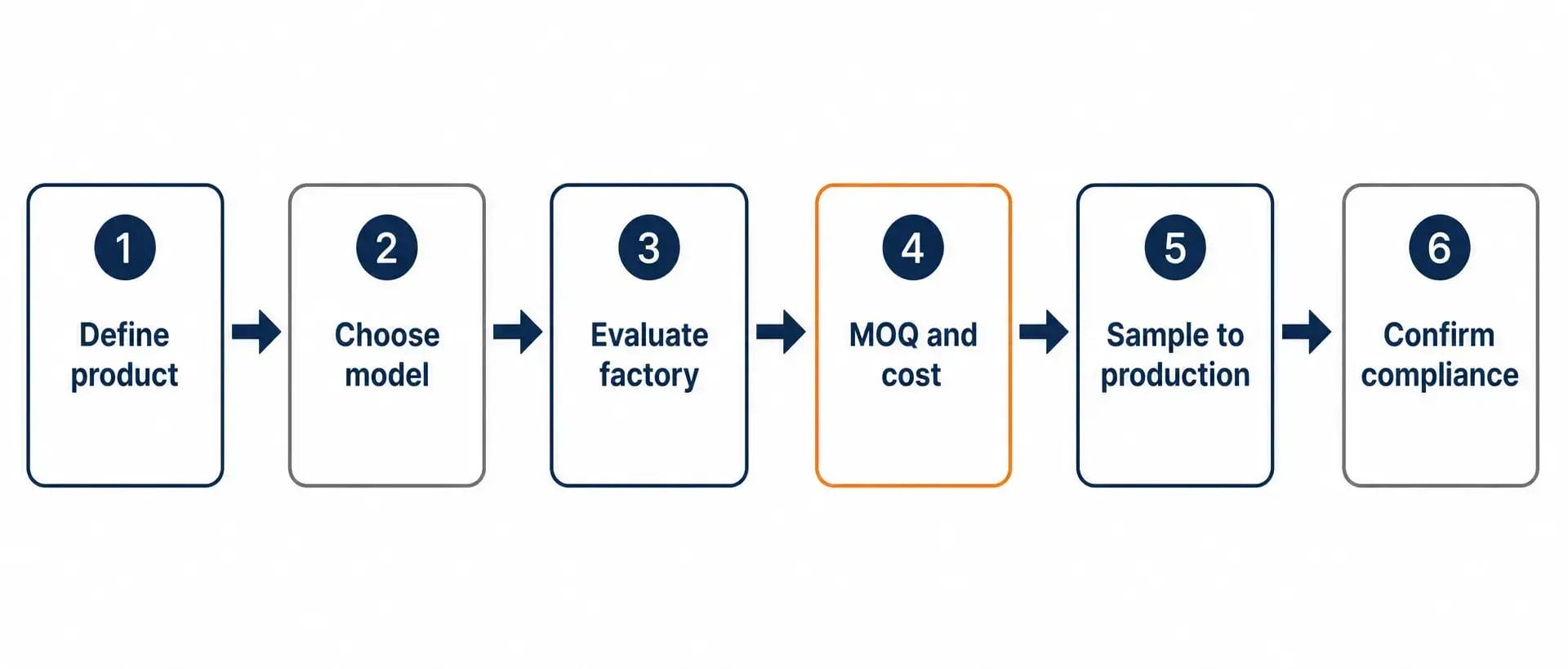
Sourcing a private-label pet product from an OEM manufacturer follows a recognizable sequence: define the product and what you need, choose between an OEM or ODM model, find and evaluate a manufacturer, work out MOQ and cost, move through prototyping to mass production, and confirm compliance for the markets you sell into. Each step depends on the one before it. This guide walks through the full journey at an overview level — use it as a sourcing map, where each section explains the decision to make, the mistake to avoid, and where to go deeper.
What pet product OEM sourcing actually involves
It is easy to picture sourcing as a single transaction — find a factory, place an order, receive goods. In practice, OEM sourcing is a chain of decisions, and the order matters. A model choice made without a clear product definition leads to the wrong kind of factory. A manufacturer chosen without thinking about target markets leads to compliance gaps late in the project. A timeline planned without understanding the sampling stage leads to a missed launch.
Seeing the whole sequence first is what makes each individual step manageable. The sections below take the journey one stage at a time. None of them is difficult on its own; the value is in doing them in order, and in not skipping the early ones because they feel less concrete than placing an order.
| Step | The decision | Why it matters |
|---|---|---|
| 1. Define the product | What exactly are you sourcing? | A vague brief makes every later step harder to pin down |
| 2. Choose OEM or ODM | Who owns the design, and how customized is it? | The model shapes IP, speed, cost, and how distinctive the product is |
| 3. Evaluate manufacturers | Which factory actually fits the product? | Category fit and compliance experience reduce sourcing risk |
| 4. Understand MOQ and cost | What drives the minimum order quantity? | MOQ affects cash flow, launch risk, and how it can be negotiated |
| 5. Plan sampling and production | When does the production clock really start? | Sampling and tooling happen before quoted lead time begins |
| 6. Confirm compliance | Which rules apply by market and material? | A sellable product needs documentation matched to its markets |
Step 1: Define the product and what you actually need
Sourcing starts before any factory is contacted. The first task is turning a product idea into something that can be communicated and built. A useful sourcing brief covers the product category and use case, the target user and pet size, any material preferences or restrictions, the target market and its compliance expectations, an estimated order quantity, and any packaging or branding requirements. This does not have to be a finished engineering specification, but it has to be specific enough that two different factories would understand the same thing from it.
This step is the one buyers most often rush, and it is also the one that quietly determines how smooth the rest of the project is. A vague brief — “a durable, comfortable dog harness” — leaves every later decision unanchored. The model choice, the factory shortlist, the quotation, and the sampling rounds all become harder to pin down, because there is no fixed product for them to attach to. Time spent sharpening the product definition at the start is recovered several times over later.
Step 2: Choose your manufacturing model — OEM or ODM
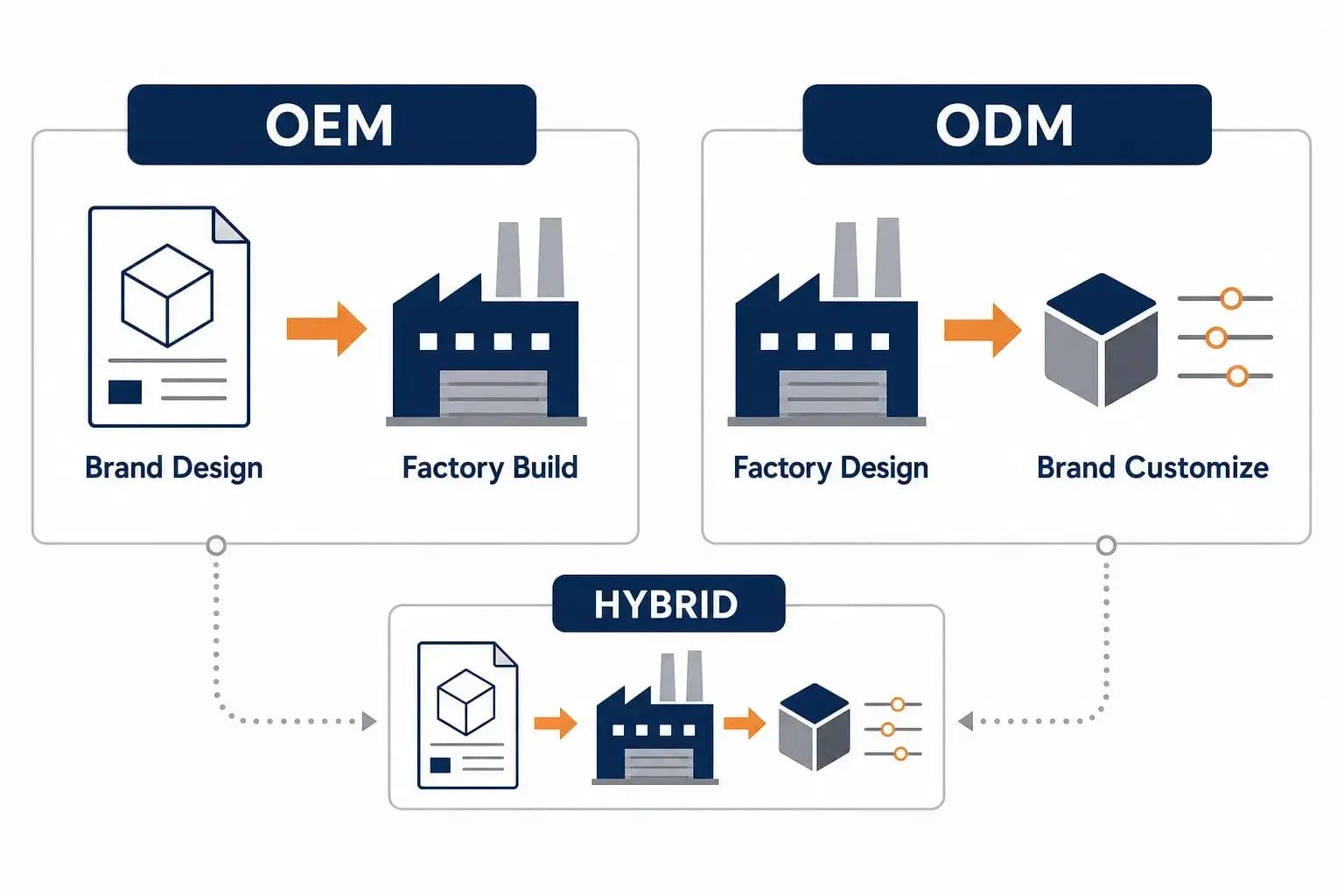
With the product defined, the next decision is which manufacturing model fits. Under an OEM (Original Equipment Manufacturer) arrangement, the brand brings the design and specification and the factory builds to it. Under an ODM (Original Design Manufacturer) arrangement, the brand starts from a design the factory already owns and customizes it. There are also hybrid arrangements that combine an ODM base structure with OEM-level customization.
The choice is not only about budget. It involves who owns the design, how distinctive the product needs to be, where intellectual property sits, and how compliance responsibility is shared. One thing it is not: OEM and ODM are not quality tiers. Neither is the “premium” option — they are different ways of assigning design ownership, customization, and development responsibility. A product meant to be unique to the brand points one way; a faster, lower-risk market entry points another. This decision is covered in full in the difference between OEM and ODM, which walks through the trade-offs and the hybrid option in detail.
Step 3: Find and evaluate the right manufacturer
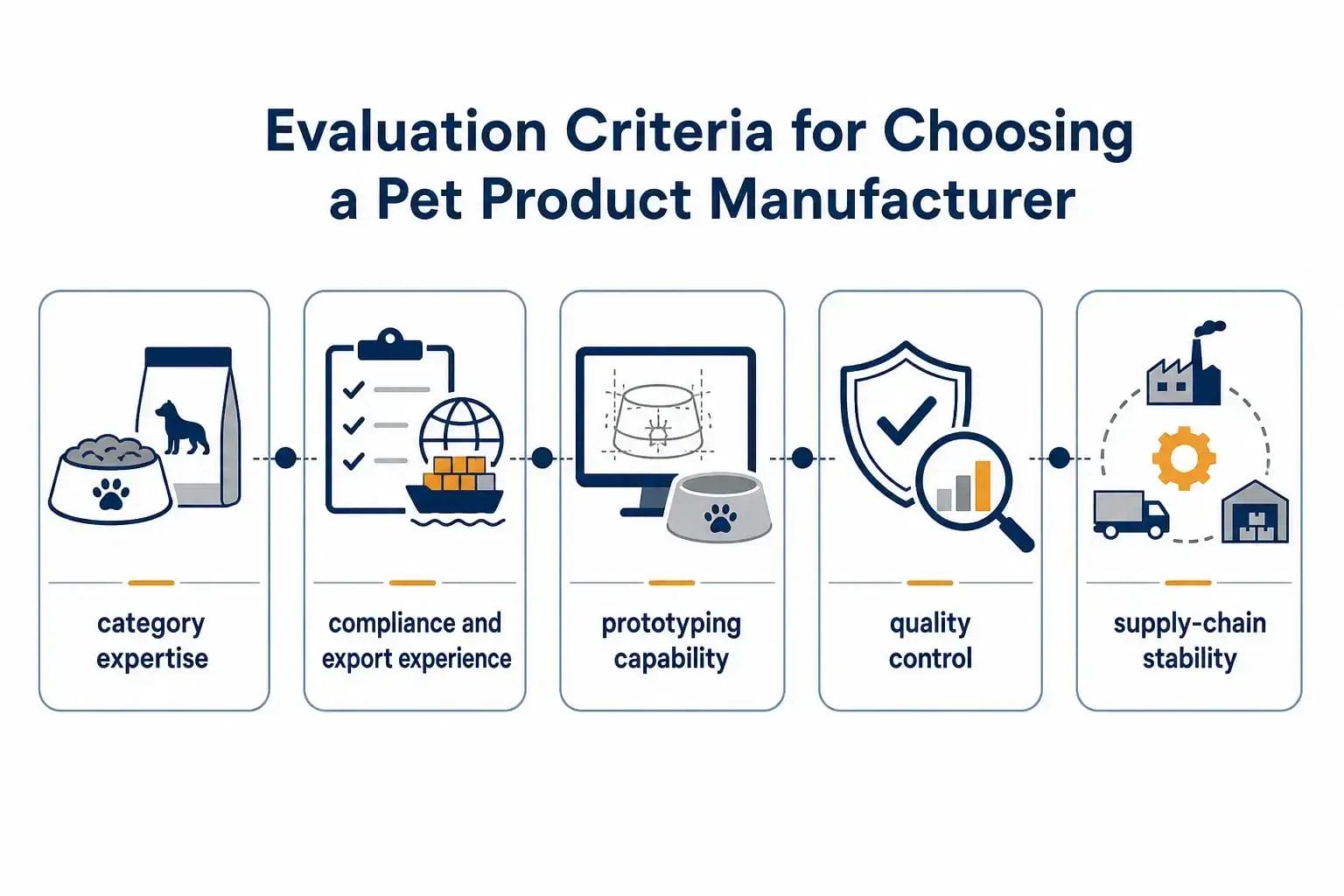
Once the model is clear, the search for a manufacturer begins — and the goal is not simply to find a factory that will take the order. It is to find one whose category expertise, compliance experience, prototyping capability, quality control, and supply-chain stability match the product. For pet products specifically, category fit often matters more than factory size alone: a harness, a feeding product, and a grooming tool draw on different materials, tests, and supply chains, and a large factory outside the relevant category is not automatically the safer choice.
Evaluation is where buyers either invest effort or pay for skipping it. Confirming a factory’s business registration, understanding its real production capability, recognizing red flags, and telling the difference between a sourcing partner that asks useful questions and an order-taker that simply agrees to everything — these checks separate a dependable supplier from a risky one. The full set of evaluation criteria and the due-diligence steps are laid out in how to choose a pet product OEM manufacturer.
Step 4: Understand MOQ, cost, and quotation
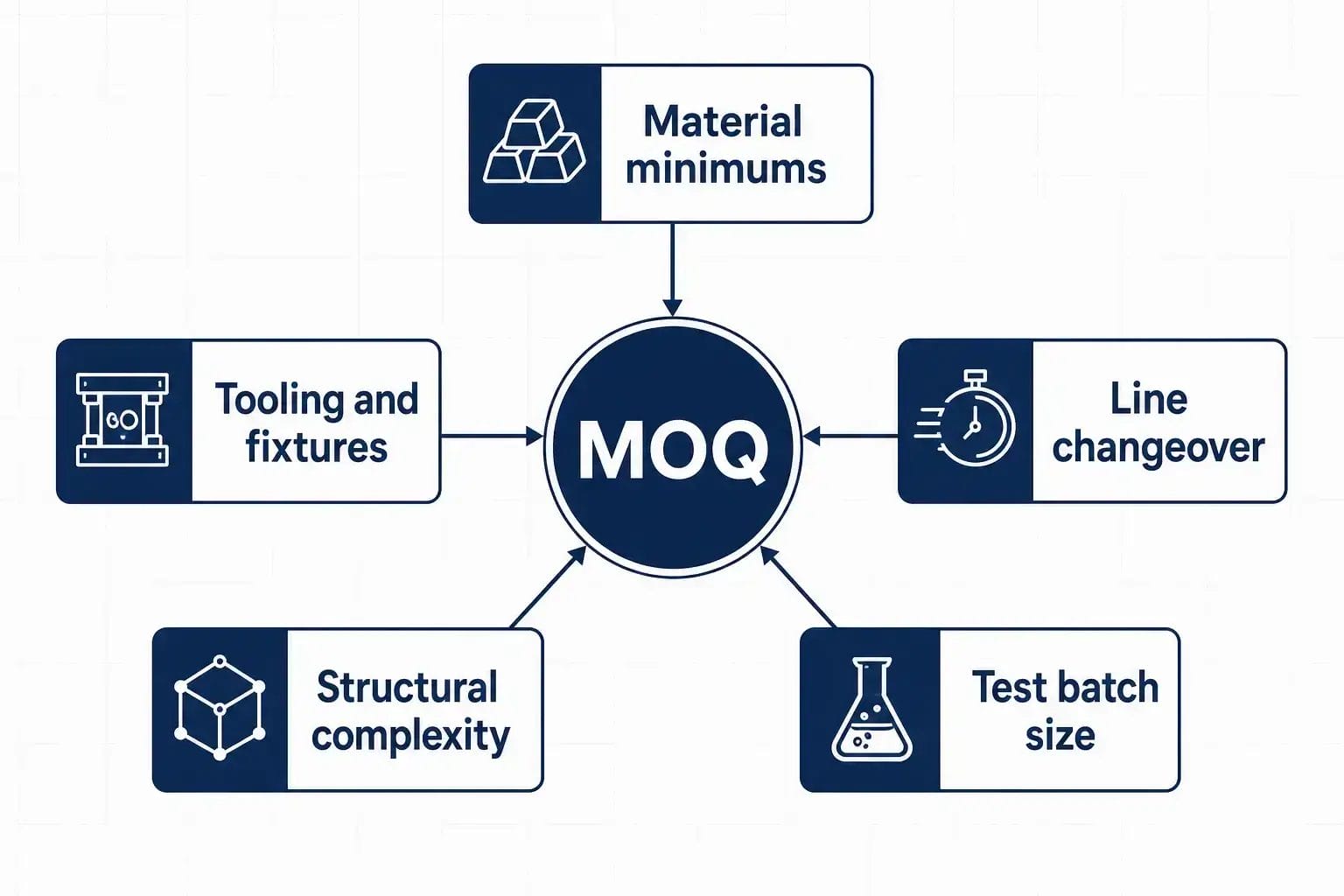
Every OEM project runs into minimum order quantity — the smallest production run a factory will accept. MOQ is not an arbitrary number a factory invents to be difficult. It is driven by identifiable cost factors: material minimums, tooling and fixtures, production-line changeover, structural complexity, and test batch sizes.
Understanding what sits behind MOQ changes how a buyer approaches it. The practical point is this: negotiating a MOQ down works best when it addresses the cost driver behind the number, not just the number itself — restructuring the tooling, the materials, or the run plan, rather than haggling over a price. MOQ also interacts with inventory risk, cash flow, and launch planning, so it is a number worth understanding rather than simply accepting or rejecting. How MOQ is calculated, and the realistic levers for negotiating it down, are covered in how pet product MOQ is calculated.
Step 5: Move from prototype to mass production
With a manufacturer chosen and quantities agreed, the project moves into production — and this is itself a multi-stage process, not a single handover. It runs through design finalization and a first sample, several sample revision rounds, tooling where the product needs it, a pre-production sample and golden sample sign-off, and finally the bulk production run and shipping.
There is one planning mistake worth flagging on its own: misreading where the production clock starts. Quoted production lead time usually runs from sample approval — not from the day the first brief reaches the factory. Sampling and tooling sit before that point and have to be counted separately, or a launch date set off the quoted number will slip. The full stage-by-stage timeline, and what tends to slow it down, is set out in The Pet Product Manufacturing Timeline: From Prototype to Mass Production.
Step 6: Confirm compliance for your target markets
Compliance is not a final box to tick — it follows from the product’s materials and the markets it is sold into, so it belongs in the planning from the start. A pet product made of fabric, plastic, coatings, and dyes carries chemical-compliance considerations that differ by destination.
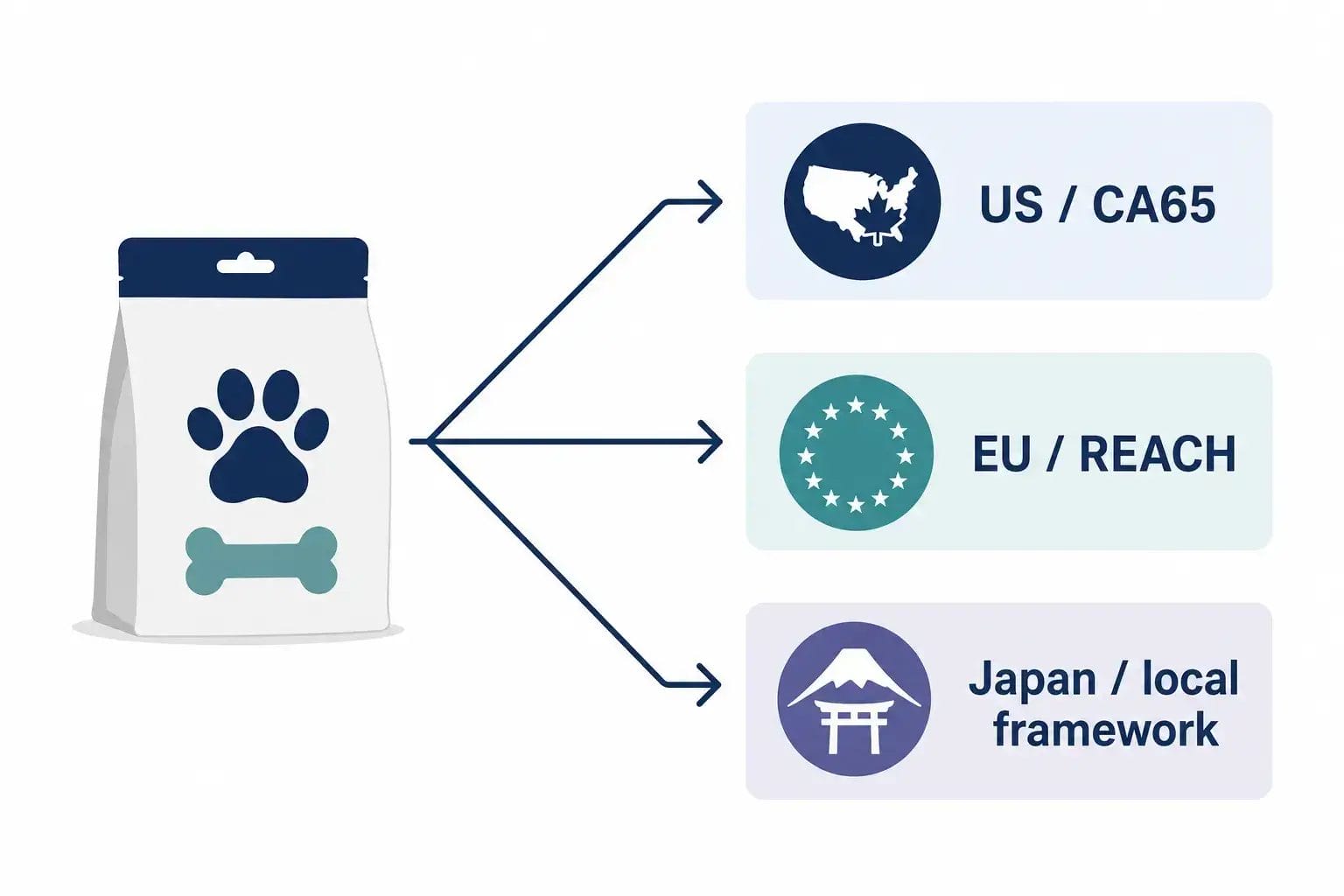
The major markets each work differently. The United States brings California’s Proposition 65; the European Union brings REACH; Japan has its own framework. Selling the same product into more than one of these means more than one regulatory picture, not one. It also means compliance is product-specific: a generic certificate is not enough if it does not match the actual product, its material set, and the target market. The market-by-market comparison is covered in pet product compliance by market, and a closer explanation of the individual regulations and which ones actually apply to a given product is covered in CA65, REACH, and RoHS for Pet Products.
Putting the sourcing journey together
The six steps are a chain, not a checklist to work through in any order. A clear product definition makes the model choice sound. The right model points to the right kind of factory. A well-evaluated factory gives realistic MOQ and quotation. A clear quotation and agreed quantities make the production timeline plannable. And compliance, considered from the start, keeps the finished product sellable in its target markets. Most sourcing problems are not caused by one bad step in isolation; they trace back to an earlier decision that was left vague and then carried forward.
A buyer who treats sourcing as a sequence of decisions — rather than a single purchase — asks better questions at each stage and meets fewer surprises later. That is also a useful test of a manufacturer: a factory that can talk through this whole journey with you, not just quote a unit price, is positioned as a development partner rather than an order-taker. To discuss sourcing a specific pet product, you can talk it through with the CrazyPaws team.
FAQ
What is the first step in pet product OEM sourcing?
Defining the product before contacting any factory. This means clarifying what the product is, who it is for, what it must do, what it is made of, and which market it targets — specific enough that different factories would understand the same thing from the brief.
Should I choose OEM or ODM for my pet product?
It depends on how distinctive the product needs to be, who should own the design and IP, and how fast and low-risk the launch needs to be. OEM gives full design control; ODM offers a faster start from an existing design. Hybrid arrangements combine the two.
What should I look for when evaluating a pet product manufacturer?
Category expertise, compliance and export experience, prototyping capability, quality control, and supply-chain stability. Confirming business registration and watching for red flags also matter — as does whether the factory asks useful questions rather than simply agreeing to everything.
How long does pet product OEM sourcing take?
The manufacturing phase alone typically runs three to six months from finalized design to a shipped first order, depending on product complexity. Earlier steps — product definition, model choice, and factory evaluation — add time before that and vary by project.
What is the most common mistake first-time pet product buyers make?
Rushing the product definition. A vague brief leaves every later decision — model, factory, quotation, sampling — without a fixed product to anchor to, which creates delays and cost that trace back to the unclear starting point.
How can I tell if a manufacturer is worth working with?
A dependable manufacturer can discuss the whole sourcing journey with you — model, evaluation, MOQ, timeline, and compliance — rather than only quoting a unit price. A factory that asks questions about your product and market is acting as a development partner.
To discuss sourcing a specific pet product, you can talk it through with the CrazyPaws team.